ALTERNATIVE DOCTOR, LLC



|
ALTERNATIVE DOCTOR, LLC
|
|
MARSHMALLOW
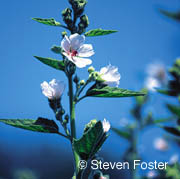
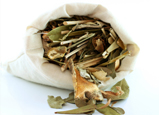
Marshmallow (Althea officinalis)—the herb, not the white puffy confection you roast on a campfire—has been used for centuries as both a food and a medicine. Its name comes from the Greek word "altho," which means "to cure." The Romans, Chinese, Egyptians, and Syrians used mallow as a source of food, while the Arabs made poultices from its leaves to treat inflammation. Studies show that the mucilage, or gummy secretion, in the leaves and particularly the root is excellent for soothing sore throats and smoothing skin. Plant Description Found in southern and western Europe, western Asia, and the northeastern region of North America, marshmallow originally grew on salty soils but now thrives in moist, uncultivated ground. Its fleshy, erect stems reach a height of three to four feet. The stems give off simple branches or, at most, a few sideways branches. The pale yellow roots are tapered, long, and thick, with a tough yet flexible exterior. The short-stemmed leaves are roundish, with irregularly toothed margins and three to five lobes. A soft and velvety down covers the leaves and stem. The flowers have five reddish-white petals. The whole plant, especially the perennial root, is filled with a mild mucilage. Parts Used The following parts of marshmallow are used for medicinal purposes.
Medicinal Uses/Indications Marshmallow is used to treat the following conditions and symptoms.
Marshmallow is also used to gently increase urine production, reduce inflammation, prevent formation of kidney stones, and promote wound healing. Traditionally, marshmallow is also used as a topical treatment for abscesses, boils, and other conditions. Available Forms Marshmallow is available in the following forms.
How to Take It The following are the recommended doses for marshmallow.
Precautions There are no reported side effects of marshmallow, and it reportedly causes no problem for use during pregnancy or breastfeeding. Possible Interactions Taking marshmallow with oral medications may delay the absorption of these medications. Supporting Research Blumenthal M, ed. The Complete German Commission E Monographs. Boston, Mass: Integrative Medicine Communications; 1998:166-167. Brinker F. Herb Contraindications and Drug Interactions. 2nd ed. Sandy, Ore: Eclectic Medical; 1998:99. British Herbal Pharmacopoeia. 4th ed. Great Britain: Biddles Ltd, Guildford and King's Lynn; 1996: 151-152. Dorland's Illustrated Medical Dictionary. 25th ed. Philadelphia, Pa: WB. Saunders; 1974. Franz G. Polysaccharides in pharmacy. Current Applications and future concepts. Planta Med. 1989; 55:493-497. Grieve M. A Modern Herbal. Vol. II. New York, NY: Dover; 1971: 507-508. Gysling E. Leitfaden zur Pharmakotherpie. Vienna: Huber, Bern Stuttgart; 1976:86. Hahn HL. Husten: Mechanismen, pathophysiologie und therapie. Disch Apoth A. 1987;127(suppl 5):3-26. Kurz H. 1989 Antitussiva und Expektoranzien. Wissenschaftliche. Verlagsgesellschaft Stuggart; 1989. Mascolo N, et al. Biological screening of Italian plants for anti-inflammatory activity. Phytotherapy Res. 1987;I:28-31. Newall C, Anderson L, Phillipson J. Herbal Medicines: A Guide for Health-care Professionals. London, England: Pharmaceutical Press; 1996:188. Nosál'ova G, Strapková A, Kardösová A, Capek P, Zathurecký L, Bukovská E. Antitussive action of extracts and polysaccharides of marsh mallow (Althea officinalis L., var. robusta). Pharmazie. 1992;47(3): 224-226. Recio MC, et al. Antimicrobial activity of selected plants employed in the Spanish Mediterranean area. Part II. Phytotherapy Res. 1989;3:77-80. Schulz V, Hansel R, Tyler V. Rational Phytotherapy: A Physicians' Guide to Herbal Medicine. 3rd ed. Berlin, Germany: Springer; 1998:150,183. Thomson WA. Medicines from the Earth: A Guide to Healing Plants. Maidenhead, England: McGraw-Hill Book Company; 1978:41. Tomoda M, Norika S, Oshima Y, Takahashi M, Murakami M, Hikino H. Hypoglycemic activity of twenty plant mucilages and three modified products. Planta Med. 1987;53:8-12.
Copyright © 2000 Integrative Medicine Communications The publisher does not accept any responsibility for the accuracy of the information or the consequences arising from the application, use, or misuse of any of the information contained herein, including any injury and/or damage to any person or property as a matter of product liability, negligence, or otherwise. No warranty, expressed or implied, is made in regard to the contents of this material. No claims or endorsements are made for any drugs or compounds currently marketed or in investigative use. This material is not intended as a guide to self-medication. The reader is advised to discuss the information provided here with a doctor, pharmacist, nurse, or other authorized healthcare practitioner and to check product information (including package inserts) regarding dosage, precautions, warnings, interactions, and contraindications before administering any drug, herb, or supplement discussed herein |