ALTERNATIVE DOCTOR, LLC



|
ALTERNATIVE DOCTOR, LLC
|
|
LINDEN
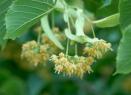
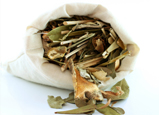
Linden (Tilia cordata/Tilia platyphyllos), an herb derived from various species of Tilia, or lime trees, has been used in European folk medicine for centuries to treat a wide range of health conditions. Today, the relaxing action of linden makes it a popular remedy for treating headaches, indigestion, nervous tension, and diarrhea. Lime trees are also valued for their wood and charcoal, and for the flavorful honey made from their flowers. Plant Description The Tilia species, also known as basswood, grow in temperate climates in the north. They are deciduous trees (leaves shed seasonally) that can grown to a height of 90 feet and may live up to 1,000 years. Herbal linden flower formulas typically call for either the Tilia cordata, the small-leafed European linden also known as the winter linden, or Tilia platyphyllos, the large-leafed, early-blooming summer linden. Both species are frequently planted as ornamental trees along city streets. Depending on the species, their fragrance ranges from potent and sweet to quite rich. The dried flowers are mildly sweet and sticky, and the fruit is somewhat sweet, slimy, and dry. Linden tea has a pleasing taste, due in part to the aromatic volatile oil found in the flowers. Parts Used The following parts of the Tilia are used in linden herbal preparations.
Medicinal Uses/Indications Different parts of the Tilia are used in treating specific conditions and symptoms.
Available Forms
How to Take It The following are recommended doses.
Precautions Excessive use of linden flower tea may cause cardiac complications, so this plant should be avoided by persons who have heart problems. Possible Interactions No harmful drug interactions have been reported. Supporting Research Benigni R, Capra C, Cattorini P. Piante Medicinali - Chimica. Farmacologia e Terapia. Vol. 1,1962; Vol 2.1964; 2:1606-1614. Bézanger-Beauquesne L, Pinkas M, Torck M, Trotin F. Plantes Médicinales des Régions Tempérées. Paris: Maloine S.A.; 1980. Bradley P, ed. British Herbal Compendium. Vol. I. Dorset (Great Britain): British Herbal Medicine Association; 1992: 142-144. Blumenthal M, ed. The Complete German Commission E Monographs. Therapeutic Guide to Herbal Medicines. Boston: Integrative Medicine Communications; 1998: 163, 343. Dorland's Illustrated Medical Dictionary. 25th ed. Philadelphia: W.B. Saunders; 1974. Glasl H, Becker U. Flavonol-O-Glykoside: Photometrische Gehaltsbestimmung. Disch Apoth Ztg. 1984; 124:2147-2152. Grieve M. A Modern Herbal. Vol. II. New York: Dover; 1971: 485-486. Gruenwald J, Brendler T, Christof J. PDR for Herbal Medicines. Montvale, NJ: Medical Economics Company; 1998: 1185-1187. Hildebrandt G, Engelbrecht P, Hildebrandt-Evers G. Physiologische Grundlagen fur eine tageszeitliche Ordnung der Schwitzprozeduren. A Klin Med. 1954; 152:446-468. Kanschar H, Lander C. Welche Aussagerkraft besitzt die Quellungszahl (QZ) als Wertbestimmungs-methode bei Tilliae flos DABS? Pharm Ztg. 1984; 129:370-373. N/A Schmersahl KJ. Uber die Wirkstoffe der diaphoretischen Drogen des DAB 6. Naturwissenschaften. 1964; 51:361. Schulz V, Hansel R, Tyler V. Rational Phytotherapy: A Physician's Guide to Herbal Medicine. 3rd ed. Berlin: Springer; 1998. Thomson WA. Medicines from the Earth: A Guide to Healing Plants. Alfred Van Der Marck ed. Maidenhead, England: McGraw-Hill Book company (UK); 1978: 105. Tyler V. The Honest Herbal: A Sensible Guide to the Use of Herbs and Related Remedies. 3rd ed. New York: Pharmaceutical Products Press; 1993: 203-204.
Copyright © 2000 Integrative Medicine Communications The publisher does not accept any responsibility for the accuracy of the information or the consequences arising from the application, use, or misuse of any of the information contained herein, including any injury and/or damage to any person or property as a matter of product liability, negligence, or otherwise. No warranty, expressed or implied, is made in regard to the contents of this material. No claims or endorsements are made for any drugs or compounds currently marketed or in investigative use. This material is not intended as a guide to self-medication. The reader is advised to discuss the information provided here with a doctor, pharmacist, nurse, or other authorized healthcare practitioner and to check product information (including package inserts) regarding dosage, precautions, warnings, interactions, and contraindications before administering any drug, herb, or supplement discussed herein |