ALTERNATIVE DOCTOR, LLC



|
ALTERNATIVE DOCTOR, LLC
|
|
HAWTHORN Hawthorn is used in Europe, particularly in Germany, for patients with
deteriorating heart function. It may also be helpful for angina,
arteriosclerosis, and some mild types of arrhythmia. If your health care
provider has advised you to try hawthorn, you probably have a very mild form of
heart disease, and studies indicate that hawthorn may help you manage your
condition. Plant Description Hawthorn is a common thorny shrub that grows up to five feet tall on
hillsides and in sunny wooded areas throughout the world. In May its flowers
bloom, but although hawthorn is in the same botanical family as roses, the
flowers are not fragrant. They grow in small clusters, and are white, red, or
pink. Small berries, called haws, sprout after the flowers. They are usually red
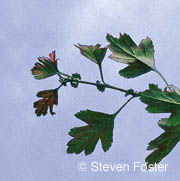
when ripe, but they may also be black. Hawthorn leaves are shiny and grow in a
variety of shapes and sizes. What's It Made Of? Hawthorn medicines start with the leaves, the berries, and sometimes, the
flowers (only the white flowers are medicinal). These parts are dried and then
made into powder. The powder is put into capsules, or added to alcohol or
glycerite (a sweet, non-alcohol liquid), along with water, so you can take it in
a liquid form. In liquid forms of botanicals, the alcohol and water create a
more digestible form. Available Forms Hawthorn comes in capsules, tinctures, standardized fluid extracts, or solid
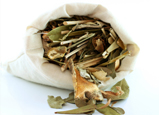
extracts. You can also make a bitter-tasting tea from dried cut hawthorn leaves,
flowers, and berries. How to Take It Look for standardized hawthorn products. Look for a label that says the
product is standardized to contain either 4 to 20 mg flavonoids/30 to 160 mg
oligomeric procyanidins, or 1.8 percent vitexin rhamnoside/10 percent
procyanidins. If you are taking hawthorn for heart failure or angina, you will need to take
it for at least six weeks, three times a day, before you notice an effect. Precautions The American Herbal Products Association (AHPA) gives hawthorn a class 1
safety rating, which indicates that it is a very safe herb with a wide dosage
range. Even so, it is always wise to follow recommended dosage. If you are
pregnant, do not use hawthorn. It is extremely important for you to note any changes you feel while you are
taking hawthorn. More pain, more angina attacks, more exhaustion while walking
or exercising—these are all good reasons to stop taking hawthorn and see your
health care provider right away. Even if you don't experience any of these
symptoms, see your health care provider if your condition hasn't improved after
six weeks of hawthorn treatment. Your progress should be monitored even if you
do feel better, so see your health care provider in either case. Possible Interactions Hawthorn can increase the effects of certain heart medications, such as
digitalis and digoxin. Do not use hawthorn if you are taking any of these
medications. Supporting Research Bahorun T, Gressier B, Trotin F, et al. Oxygen species scavenging activity of
phenolic extracts from hawthorn fresh plant organs and pharmaceutical
preparations. Arzneimittelforschung. 1996;46:1086–1089. Blumenthal M, ed. The Complete German Commission E Monographs: Therapeutic
Guide to Herbal Medicines. Boston, Mass: Integrative Medicine
Communications; 1998. Blumenthal M, Riggins C. American Botanical Council's Popular Herbs in the
U.S. Market. Therapeutic Monographs. Austin Tex: ABC; 1997. Brinker F. Botanical medicine research summaries. In: Eclectic Dispensary
of Botanical Therapeutics. Vol. 2. Sandy, Ore: Eclectic Medical; 1995. Brinker F. Herb Contraindications and Drug Interactions. 2nd ed.
Sandy, Ore: Eclectic Medical; 1998:82-83. Chaterjee SS. In vitro and in vivo studies on the cardioprotective action of
oligomeric procyanidins in a crataegus extract of leaves and blooms.
Arzneimittelforschung. 1997;47:821–825. Chen ZY, Zhang ZS, Kwan KY, et al. Endothelium-dependent relaxation induced
by hawthorn extract in rat mesenteric artery. Life Sci.
1993;63(22):1983–1991. Hahn F, Klinkhammer F, Oberdorf A. Preparation and pharmacological
investigation of a new therapeutic agent obtained from Crataegus oxyacantha.
Arzneim-Forsch. 1960;10:825–829. Hobbs C, Foster S. Hawthorn: a literature review. Herbalgram.
1990;22:19–33. Mashour NH, Lin GI, Frishman WH. Herbal medicine for the treatment of
cardiovascular disease. Arch Intern Med. 1998;158:2225–2234. Mawrey DB. Herbal Tonic Therapies. New Canaan, Conn: Keats; 1993. Miller L. Herbal medicinals: selected clinical considerations focusing on
known or potential drug-herb interactions. Arch Intern Med.
1998;158(20):2200–2211. Semm K. The action of Crataegus alone and in combination with Digitalis
purpurea, Digitalis leant, Adonis vernalis, and Convallaria
majalis upon the heart of the guinea pig. Arzneim-Forsch.
1952;2:5562–5567. The Criteria Committee of the New York Heart Association I. Diseases of
the Heart and Blood Vessels: Nomenclature and Criteria for Diagnosis. 6th
ed. Boston, Mass: Little, Brown; 1964. Hoffmann D. Hawthorn: The Heart Helper. Alternative & Complementary
Therapies. 1995;4:191–192. Kowalchik C, Hylton W, eds. Rodale's Illustrated Encyclopedia of Herbs.
Emmaus, Pa: Rodale Press; 1998. Leuchtgens H. Crataegus special extract WS 1442 in NYHA II heart failure. A
placebo controlled randomized double-blind study [in German]. Fortschr Med.
1993;111:352–354. Loew D, Albrecht M, Podzuweit H. Efficacy and tolerability of a Hawthorn
preparation in patients with heart failure stage I and II according to NYHA—a
surveillance study. Presented at the Second International Congress on
Phytomedicine; 1996; Munich, Germany. McGuffin M, Hobbs C, Upton R, Goldberg A. American Herbal Products
Association's Botanical Safety Handbook. Boca Raton, Fla: CRC Press; 1997. Nasa Y, Hashizume AN, Hoque E, Abiko Y. Protective effect of crataegus
extract on the cardiac mechanical dysfunction in isolated perfused working rat
heart. Arzneimittelforschung. 1993;42II(9):945–949. Newall CA, Anderson LA, Phillipson JD. Herbal Medicines: A Guide for
Health Care Professionals. London, England: The Pharmaceutical Press; 1996. Nikolov N, Wagner H, Chopin J, Della Monica G, Chari VM, Seligmann O. Recent
investigations of crataegus flavonoids. Proceedings of the International
Bioflavonoid Symposium; 1981; Munich, Germany. Popping S, Rose H, Ionescu I, Fischer Y, Kammermeier H. Effect of a hawthorn
extract on contraction and energy turnover of isolated rat cardiomycocytes.
Arzneimittelforschung. 1995;45:1157–1161. Schmidt U, Kuhn U, Ploch M, Hubner WD. Efficacy of the hawthorn (crataegus)
preparation LI 132 in 78 patients with chronic congestive heart failure defined
as NYHA functional class II. Phytomedicine. 1994;1:17–34. Schultz V, Hansel R, Tyler V. Rational Phytotherapy: A Physician's Guide
to Herbal Medicine. Heidelberg: Springer; 1998. Schussler M, Holzl J, Fricke U. Myocardial effects of flavonoids from
crataegus species. Arzneimittelforschung. 1995;45:842–845. Tauchert M, Ploch M, Hubner WD. Effectiveness of hawthorn extract LI 132
compared with the ACE inhibitor Captopril: Multicenter double-blind study with
132 NYHA stage II. Muench Med Wochenschr. 1994;136 (suppl):S27–S33. Trunzler G, Schuler E. Comparative studies on the effects of Crataegus
extract, digitoxin, digoxin, and g-strophanthidin in the isolated heart of
homeothermals. Arzneim-Forsch. 1962;12:198–202. Tyler VE. Herbs of Choice: The Therapeutic Use of Phytomedicines. New
York, NY: Pharmaceutical Products Press; 1994. Varga A. Treatment of the coronary syndrome and cardiac failure with
Aenylcrat and Adenylcrat-digoxin. Munchen Medizinische Wochenschrift.
1970;112:2247–2251. Vibes J, Lasserre B, and Gleye J. Effects of a methanolic extract from
Crataegus oxycantha blossoms on TXA2 and PGI2 synthesizing activities of
cardiac tissue. Med Sci Res. 1993;21:534–436. Vibes J, Lasserre B, Gleye J, Declume C. Inhibition of thromboxane A2
biosynthesis I vitro by the main components of Crataegus oxyacantha
(hawthorn) flower heads. Prostaglandins, Leukotrienes and Essential Fatty
Acids. 1994;50:174–175. Weikl A, Assmus KD, Neukum-Schmidt A, et al. Crataegus special extract WS
1442. Assessment of objective effectiveness in patients with heart failure.
Fortschr Med. 1996;114:291–296. Weiss R F. Herbal Medicine. Beaconsfield, England: Beaconsfield
Publishers, Ltd; 1988:162–169. Werbach M. Botanical Influences on Illness. Tarzana, Calif: Third Line
Press; 1994. Wichtl M, ed. Herbal Drugs and Phytopharmaceuticals. Boca Raton, Fla:
CRC Press; 1994. Zapfe G, Assmus KD, Noh HS. Placebo-controlled multicenter study with
Crataegus special extract WS 1442: clinical results in the treatment of NYHA II
cardiac insufficiency. Presented at the Fifth Congress on Phytotherapy; June 11,
1993; Bonn, Germany. Copyright © 2000 Integrative Medicine Communications The publisher does not accept any responsibility for the
accuracy of the information or the consequences arising from the application,
use, or misuse of any of the information contained herein, including any injury
and/or damage to any person or property as a matter of product liability,
negligence, or otherwise. No warranty, expressed or implied, is made in regard
to the contents of this material. No claims or endorsements are made for any
drugs or compounds currently marketed or in investigative use. This material is
not intended as a guide to self-medication. The reader is advised to discuss the
information provided here with a doctor, pharmacist, nurse, or other authorized
healthcare practitioner and to check product information (including package
inserts) regarding dosage, precautions, warnings, interactions, and
contraindications before administering any drug, herb, or supplement discussed
herein. |