ALTERNATIVE DOCTOR, LLC



|
ALTERNATIVE DOCTOR, LLC
|
|
GREEN TEA Green tea is not usually prescribed as a remedy for diseases. But people all
over the world have noticed that drinking green tea daily has many health
benefits. Green tea is an important preventative against cancer, elevated blood
fats, hardening of the arteries, and dental cavities. It also protects against
bacterial dysentery. Green tea can help ward off a number of fungal, bacterial,
and even viral infections (like the common cold) as well. The difference between green and black teas is in their processing. The fresh
leaves are slightly steamed and then quickly dried in green tea. This prevents
enzymes in the tea from breaking down nutritious substances called polyphenols,
which are the cancer-fighting compounds in green tea. Green tea polyphenols (GTP)
are even better antioxidants than vitamins C and E. Green tea is good for your digestive system. It helps you think more clearly,
and even improves your eyesight. Green tea strengthens arteries and reduces
excess fats in the blood. It clears phlegm from sore throats, and neutralizes
poisons. The tannins in green tea can stop diarrhea. If you want to increase the
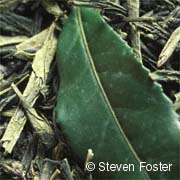
tannin levels in your tea, let it brew longer. Plant Description The tea plant is a large shrub with evergreen leaves. It originally came from
China, where it has been used for more than 5,000 years. Today, tea is grown
throughout Asia and parts of the Middle East and Africa. Black tea is more
common in the United States. But black tea is fermented and not as healthy as
green tea. Green tea is unfermented. (Oolong tea is semi-fermented.) What's It Made Of? The leaf buds and young leaves make the best green tea. Tea contains the
purine alkaloids caffeine, theophylline, and theobromine. But the most important
active ingredients are polyphenols, which are responsible for many of the
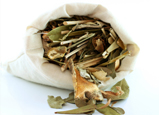
therapeutic and preventive actions of green tea. Available Forms Most green tea products are sold as dried leaf tea. There are also extracts
made from the leaves and leaf buds. Green tea has 300 to 400 polyphenols and 50
to 100 mg caffeine per cup. Decaffeinated green tea products contain
concentrated polyphenols (60 to 89 percent total polyphenols). How to Take It One of the active compounds in green tea is as effective as aspirin in
keeping blood platelets from clumping together, which improves circulation. And
green tea helps stop hardening of the arteries. Population studies show that
there's less cancer in countries where people drink green tea every day, but no
cause and effect has been established. Black tea does not have the same effect.
In fact, if you drink a lot of black tea, you increase your risk for getting
cancers of the rectum, gallbladder, and endometrium. Green tea's cancer-fighting
effects work best against gastrointestinal cancer, lung cancer, and breast
cancer. Green tea is highly recommended as an alternative to coffee and black
tea. Three cups of green tea per day (3 g soluble components, or 240 to 320 g
polyphenols) or 300 to 400 mg per day of standardized green tea extract
(extracts should contain 80 percent total polyphenols and 55 percent
epigallocatechin) is the recommended dosage. Capsules and liquid preparations
are also available. Precautions Limit your intake of green tea if you have a sensitive stomach,
cardiovascular complications, kidney disorder, overactive thyroid, or tendency
toward spasm. If you're prone to anxiety attacks, be careful drinking tea or any
caffeinated beverage. If you're pregnant, don't ingest any products that contain caffeine,
including tea. If you must have tea, try to limit yourself to no more than 3
cups of green tea per day. This is a maximum of 200 mg of caffeine per day. And
drink your tea over the course of the entire day (but not too late at night).
Don't drink it all in a short period of time. You should also avoid tea if
you're nursing. Even a small amount of caffeine might give your baby a sleeping
disorder. If you take more than 1.5 grams of tea every day over a long period of time,
you might develop serious symptoms. This much caffeine can cause irritability,
insomnia, heart palpitation, and dizziness. You may experience vomiting,
diarrhea, and headaches, and you might lose your appetite. If you're drinking a
lot of tea and start to vomit or have abdominal spasms, you may have caffeine
poisoning. Lower your caffeine intake and see your health care provider if your
symptoms are severe. The side effects of drinking too much tea are usually not
fatal. Possible Interactions Do not take green tea if you are taking anticoagulant (blood-thinning)
medications like warfarin because this herb may inhibit the effect of these
medications. Green tea may affect the absorption of the following medications: atropine,
codeine, ephedrine and pseudoephedrine. It may also interfere with the
absorption of asthma medications like theophylline and aminophylline, and
psychotherapeutic medications like haloperidol. Therefore, it is best to avoid
using green tea when taking these medications. Supporting Research Akella GD, Henderson SA, Drewnowski A. Sensory acceptance of Japanese green
tea and soy products is linked to genetic sensitivity to 6-N-propylthiouracil.
Nutr Cancer. 1997;29(2):146–151. Ali M, et al. A potent thromboxane inhibitor in green tea. Prostaglandins
Leukot Essent Fatty Acids. 1990;40:281–283. Blumenthal M, ed. The Complete German Commission E Monographs.
Therapeutic Guide to Herbal Medicines. Boston, Mass: Integrative Medicine
Communications; 1998:47, 132. Bradley P, ed. British Herbal Compendium. Dorset, England: British
Herbal Medicine Association; 1992:1:96–98. Das M, Vedasiromoni JR, Chauhan SP, et al. Effect of green tea (Camellia
sinensis) extract on the rat diaphragm. J Ethnopharmacol.
1997;7(3):197–201. Fujiki H, Suganuma M, Okabe S, et al. Mechanistic findings of green tea as
cancer preventive for humans. Proc Soc Exp Biol Med. 1999;220(4):225–228. Hasegawa R, Takekida K, Sai K, et al. Inhibitory effect of green tea infusion
of hepatotoxicity [in Japanese]. Kokuritsu Iyakuhin Shokuhin Eisei Kenkyusho
Hokoku. 1998;(116):82–91. Heinerman J. Heinerman's Encyclopedia of Fruits, Vegetables and Herbs.
Englewood Cliffs, NJ: Prentice Hall; 1988:112–113. Ichikawa D, Takahashi T, Adachi T, et al. Postoperative management of the
preserved rectal segment in patients with familial polyposis: the use of
5-fluorouracil suppositories and green tea extract to inhibit tumor growth [in
Japanese]. Nippon Geka Gakkai Zasshi. 1998;99(6):391–395. Imai K, Nakachi K. Cross sectional study of effects of drinking green tea on
cardiovascular and liver diseases. BMJ. 1995;310:693–696. Kakuda T, Sakane I, Takihara T. Effects of tea (Camellia sinensis)
chemical compounds on ethanol. Biosci Biotechnol Biochem.
1996;60(9):1450–1454. Murray M. The Healing Power of Herbs: The Enlightened Person's Guide to
the Wonders of Medicinal Plants. Second Ed. Rocklin, Calif: Prima
Publishing; 1995. Nagata C, Kabuto M, Shimizu H. Association of coffee, green tea, and caffeine
intakes with serum concentrations of estradiol and sex hormone–binding globulin
in premenopausal Japanese women. Nutr Cancer. 1998;30(1):21–24. Okai Y, Higashi-Okai K. Potent suppressing activity of the non-polyphenolic
fraction of green tea (Camellia sinensis) against genotoxin-induced
umu C gene expression in Salmonella typhimurium (TA 1535/pSK
1002)—association with pheophytins a and b. Cancer Lett.
1997;120(1):117–123. Poppel Piet A, van den Brandt. Consumption of black tea and cancer risk: a
prospective cohort study. J Natl Cancer Inst. 1996;88:93–100. Sadzuka Y, Sugiyama T, Hirota. Modulation of cancer chemotherapy by green
tea. Clin Cancer Res. 1998;4(1):153–156. Shim JH, Kang MG, Kim YH, Roberts C, Lee IP. Chemopreventive effect of green
tea (Camellia sinensis) among cigarette smoke. Cancer-Epidemio-Biomarkers-Prev.
1995;Jun; 4(4): 387-91. Sirving K. Drinking black tea may cut risk of stroke. AMA Arch Intern Med.
March 25, 1998. Snow J. Camellia sinensis (L.) Kuntze (Theaceae). The Protocol Journal of
Botanical Medicine. 1995;1:47–51. Sugiyama T, Sadzuka Y. Enhancing effects of green tea components on the
antitumor activity of adriamycin against M5076 ovarian sarcoma. Cancer Lett.
1998;133(1):19–26. Tamozawa H, et al. Natural antioxidants I. Antioxidant components of tea leaf
(Thea sinensis L.). Chem Pharm Bull. 1984;32:2011–2014. Taylor JR, Wilt VM. Probable antagonism of warfarin by green tea. Ann
Pharmacother. 1999;33(4):426–428. Tyler V. Herbs of Choice: The Therapeutic Use of Phytomedicinals.
Binghamton, NY: Haworth; 1994. Wang Z, et al. Antimutagenic activity of green tea polyphenols. Mutation
Research. 1989;223:273–285. Windridge C. The Fountain of Health. An A-Z of Traditional Chinese
Medicine. London, England: Mainstream Publishing; 1994:259. Copyright © 2000 Integrative Medicine Communications The publisher does not accept any responsibility for the
accuracy of the information or the consequences arising from the application,
use, or misuse of any of the information contained herein, including any injury
and/or damage to any person or property as a matter of product liability,
negligence, or otherwise. No warranty, expressed or implied, is made in regard
to the contents of this material. No claims or endorsements are made for any
drugs or compounds currently marketed or in investigative use. This material is
not intended as a guide to self-medication. The reader is advised to discuss the
information provided here with a doctor, pharmacist, nurse, or other authorized
healthcare practitioner and to check product information (including package
inserts) regarding dosage, precautions, warnings, interactions, and
contraindications before administering any drug, herb, or supplement discussed
herein. |