ALTERNATIVE DOCTOR, LLC



|
ALTERNATIVE DOCTOR, LLC
|
|
FEVERFEW
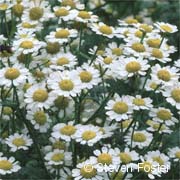
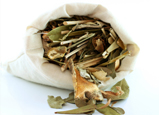
Feverfew has been used for centuries in European folk medicine for headache, arthritis, and fever. Feverfew comes from the Latin word, febrifuge, which means fever-reducing. This herb was traditionally used for insect bites, irregular menstruation, stomachaches, and toothache, although modern herbalists do not usually use it for these conditions. Herbalists today use feverfew to treat migraine, arthritis in its early stages, rheumatic diseases, and other conditions. Plant Description Feverfew originally came from southeastern Europe. Today, it is widespread throughout Europe, North America and Australia. It is a short perennial that blooms between July and October. In the past, it could be seen in nearly every hedgerow throughout the gardens of England and Germany. People planted feverfew around their homes because they believed it would purify the atmosphere and ward off disease. The small, daisy-like yellow flowers of this plant show that it belongs to the daisy family. Feverfew looks a little like chamomile, but it has some differences. The yellow-green leaves are alternate, and turn downward with short hairs. The leaves are the most important part for herbal medicine. Feverfew is an aromatic herb with a strong and bitter smell. What's It Made Of? Feverfew products are usually made from the leaves. Sometimes they are made from the aerial parts (all the parts of the plant that grow above the ground). The migraine-relieving activity of feverfew comes from an active compound called parthenolide. Parthenolide affects smooth muscle in the walls of blood vessels in the brain to block the action of vasoconstrictors like serotonin, prostaglandins, and norepinephrine. Vasoconstrictors narrow blood vessels and are one of the main causes of migraines. Available Forms Feverfew capsules are usually made from dried leaves. Always look for standardized products that contain at least 0.2 percent parthenolide. If the product is not standardized, you cannot be sure that you are actually getting enough parthenolide. And without parthenolide, you might not reap optimal health benefits. It is important that you read the label carefully on feverfew products because the amount of parthenolide varies depending upon where the feverfew was grown. Feverfew from some regions of the world has very little or even no parthenolide. You can also chew leaves from feverfew that you plant yourself or buy from an herbal market. However, be cautious in eating the leaves. About 10 percent of people who chew feverfew leaves get mouth ulcerations, loss of taste, and swelling of their lips, tongue, and mouth. How to Take It Today, nearly 10 percent of Americans suffer from migraines. Feverfew can provide effective relief for many of these people. It is used to treat migraines in progress and stop migraines before they start. It is most beneficial for migraine sufferers who have not had much success with other medications. (This includes prescription drugs and over-the-counter pain medications.) Feverfew is safe when used according to your health care provider's instructions. In the 1980s, British researchers found that 70 percent of migraine sufferers who ate two to three fresh feverfew leaves every day got serious relief from their headaches. The British scientists were so amazed by this high success rate that they expanded their research. They discovered that feverfew was much more effective than placebo in reducing migraine severity. And feverfew also decreased symptoms of nausea and vomiting associated with migraine. In 1997, feverfew ranked number 19 on a list of top-selling herbs at health food stores in the United States. Medical experts are not sure if feverfew reduces the inflammation of arthritis. The evidence so far is conflicting. But some people who have arthritis claim that feverfew helps decrease their pain and stiff joints. Recommended dosage:
Precautions Feverfew works best for migraine sufferers who have not responded well to conventional treatment. Sometimes people experience side effects such as abdominal pain, indigestion, flatulence, diarrhea, nausea, vomiting, and nervousness. Because feverfew can alter the menstrual cycle, menstruating women should use it with caution. Pregnant women, nursing women, and children under 2 years old should not take feverfew. Possible Interactions You should not take feverfew if you are taking aspirin, warfarin, or another blood-thinning medication because this herb also has blood-thinning properties. If you are taking any of these medications, you should consult your health care provider before taking feverfew. Supporting Research Blumenthal M, ed. The Complete German Commission E Monographs. Therapeutic Guide to Herbal Medicines. Boston, Mass: Integrative Medicine Communications; 1998:12. Bradley P, ed. British Herbal Compendium. Dorset, England: British Herbal Medicine Association; 1992:1:96–98 Brown D. Herbal Prescriptions for Better Health. Rocklin, Calif: Prima Publishing; 1996:91–95 De Weerdt CJ, Bootsma HPR, Hendriks H. Herbal Medicines in migraine prevention. Randomized double-blind placebo controlled crossover trial of a feverfew preparation. Phytomedicine. 1996;3:225–230. Grieve M. A Modern Herbal. New York, NY: Dover; 1971:1:309–310. Gruenwald J, Brendler T, Jaenicke C et al, eds. PDR for Herbal Medicines. Montvale, NJ: Medical Economics Company; 1998:1171–1173. Heptinstall S, Groenewegen W, Spangenberg P, Lösche W. Inhibition of platelet behavior by feverfew: a mechanism of action involving sulfhydryl groups. Folia Haematol Int Mag Klin Morphol Blutforsch. 1988;43:447–449. Johnson ES, Kadam NP, Hylands DM, Hylands PJ. Efficacy of feverfew as prophylactic treatment of migraine. Br Med J. 1985;291:569–573. Johnson ES. Patients who chew chrysanthemum leaves. MIMS Magazine May 15, 1983:32–35. Miller L. Herbal medicinals: selected clinical considerations focusing on known or potential drug-herb interactions. Arch Intern Med. 1998;158(20):2200–2211. Murphy JJ, Heptinstall S, Mitchell JR. Randomised double-blind placebo-controlled trial of feverfew in migraine prevention. Lancet. 1988;2:189–192. Murray MT. The Healing Power of Herbs: The Enlightened Person's Guide to the Wonders of Medicinal Plants. 2nd ed. Rocklin, Calif: Prima Publishing; 1995. Newall CA, Anderson LA, Phillipson JD. Herbal Medicines: A Guide for Health-care Professionals. London, England: Pharmaceutical Press; 1996:119–120. Palevitch D, Earon G, Carasso R. Feverfew (Tanacetum parthenium) as a prophylactic treatment for migraine: a double-blind controlled study. Phytotherapy Res. 1997;11:508–511. Pattrick M, Heptinstall S, Doherty M. Feverfew in rheumatoid arthritis: a double-blind, placebo controlled study. Ann Rheum Dis. 1989;48:547–549. Tyler VE. Herbs of Choice: The Therapeutic Use of Phytomedicinals. Binghamton, NY: Pharmaceutical Products Press; 1994:126–134. Tyler VE. The Honest Herbal: A Sensible Guide to the Use of Herbs and Related Remedies. 3rd ed. Binghampton, NY: Pharmaceutical Products Press; 1993.
Copyright © 2000 Integrative Medicine Communications The publisher does not accept any responsibility for the accuracy of the information or the consequences arising from the application, use, or misuse of any of the information contained herein, including any injury and/or damage to any person or property as a matter of product liability, negligence, or otherwise. No warranty, expressed or implied, is made in regard to the contents of this material. No claims or endorsements are made for any drugs or compounds currently marketed or in investigative use. This material is not intended as a guide to self-medication. The reader is advised to discuss the information provided here with a doctor, pharmacist, nurse, or other authorized healthcare practitioner and to check product information (including package inserts) regarding dosage, precautions, warnings, interactions, and contraindications before administering any drug, herb, or supplement discussed her |