ALTERNATIVE DOCTOR, LLC



|
ALTERNATIVE DOCTOR, LLC
|
|
EVENING PRIMROSE Evening primrose is native to North America where it was used for both food
and medicine. Native Americans boiled and ate the peppery, nutty-flavored root,
and used leaf poultices from the plant for bruises and hemorrhoids. European
settlers took the root back to England and Germany, where it was planted for
food. Today, evening primrose is mostly grown for its seed oil. The oil, usually
called EPO, is used in England to relieve the itchiness of atopic dermatitis,
and to ease breast pain and tenderness associated with premenstrual syndrome and
other causes. But further research may show its usefulness to extend beyond the
treatment of these conditions. Eczema, diabetes, cardiovascular disease, high
cholesterol, chronic fatigue syndrome, and even cancer may one day be reasons to
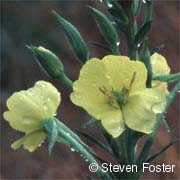
use EPO. Plant Description A circle of leaves grows close to the ground around evening primrose stems
after the first year it is planted. In the second year, flowers grow. The
flowers bloom with creamy yellow or bright yellow blossoms from June to
September, but only after sunset or on cloudy days. What's It Made Of? Using a chemical called hexane, oil is taken from the seeds and prepared as
medicine. The seeds contain essential fatty acids, or EFAs, which are a
necessary part of our diets. The EFAs in evening primrose seeds are linoleic
acid (LA) and gamma-linolenic acid (GLA). Because GLA is known to affect systems
in the body that cause or reduce inflammation, it may have a major role in
treating many illnesses, especially those that cause pain and inflammation. Available Forms You can get EPO as an oil or in capsules. Usually the capsules are preferred.
Keep the product out of direct sunlight—better yet, in the refrigerator, which
will prevent the oil from becoming rancid. EPO is usually standardized to an 8 percent gamma-linolenic acid. How to Take It Many drugs, such as aspirin, have similar anti-inflammatory and pain
relieving effects as EPO. However, these drugs do not supply any kind of dietary
fatty acid and they can have side effects. In contrast, EPO gives your body
something it may need, with little or no side effects. If you and your health care provider have decided to try EPO, make sure you
keep track of your dosages as well as how the treatment is working for you.
Stick with the program that you and your provider have chosen for at least three
months. In clinical studies, it has taken that long for effects to be seen, and
in many cases, the effects were significant. For example, 60 percent of
rheumatoid arthritis patients who took EPO were able to stop or reduce the
amount of pain killers they normally took. Skin rash, mastalgia (breast pain), and premenstrual syndrome (PMS) are the
three conditions for which dosages have been recommended. For skin rash, the
recommended daily dosage is 6 to 8 g for adults and 2 to 4 g for children. For
mastalgia, the recommended dosage is 3 to 4 g daily. For PMS, the recommended
dosage is 3 g daily. EPO is available as capsules and as oil. Follow package
directions and your health care provider's instructions. If you are taking EPO for arthritis, dry and scaly skin, or most other
conditions, a dosage of about 3 g per day is considered safe. Be sure to discuss
this with your health care provider before taking EPO. Precautions The American Herbal Products Association (AHPA) gives EPO a class 1 safety
rating, which means it's safe with appropriate use. There have been rare reports
of nausea and headaches from using it. Stomach pain and loose stools may be
indications that your dosage is too high. Talk to your health care provider
about it, and lower your dosage based on his/her instructions. Taking EPO while breastfeeding is believed to be safe. Breast milk actually
contains both LA and GLA, and it may be a necessary part of a newborn's diet.
Safety during pregnancy has not been determined—talk with your health care
provider. Possible Interactions If you are taking psychotherapeutic medications to treat schizophrenia, talk
with your health care provider before taking evening primrose oil. It can
interact with these medications and increase the risk of seizures. For the same
reason, you should avoid taking this herb with antidepressant medications
(medicines to treat depression), particularly tricyclic antidepressants, and
anticonvulsant medications that are used to treat seizure disorders. Supporting Research Belch JJR, Ansell D, Madhok R, O'Dowd A, Sturrock RD. Effects of altering
dietary essential fatty acids on requirements for NSAIDs in patients with
rheumatoid arthritis. Ann Rheum Dis. 1988;47:96–104. Blumenthal M, Riggins C. Popular Herbs in the U.S. Market: Therapeutic
Monographs. Austin, Tex: The American Botanical Council; 1997. Brehler R, Hildebrand A, Luger TA. Clinical reviews: recent developments in
the treatment of atopic eczema. J Am Acad Dermatol. 1997; 36: 989–990. Corbett R, Menez JF, Floch HH, et al. The effects of chronic ethanol
administration on rat liver and erythrocyte lipid composition: modulatory role
of evening primrose oil. Alcohol Alcohol. 1991;26(4):459–464. Foster S. Herbal Renaissance: Growing, Using and Understanding Herbs in
the Modern World. Salt Lake City, Utah: Gibbs-Smith; 1993. Fugh-Berman A. Complementary and Alternative Therapies in Primary Care:
Clinical trials of herbs. Primary Care: Clinics in Office Practice. 1997;
24: 889–903. Graham-Brown R. Psychodermatology: Managing adults with atopic dermatitis.
Dermatologic Clinics. 1996;14: 536. Greenfield, S.M. et al. A randomized controlled study of evening primrose oil
and fish oil in ulcerative colitis. Aliment Pharmacol Ther.
1993;7:159–166. Holman CP, Bell AFJ. A trial of evening primrose oil in the treatment of
chronic schizophrenia. J Orthomol Psychiatry. 1983;12:302–304. Horrobin DF. Interactions between n-3 and n-6 essential fatty acids (EFAs) in
the regulation of cardiovascular disorders and inflammation. Prostaglandins
Leukot Essent Fatty Acids. 1991;44:127–131. Horrobin DF. The relationship between schizophrenia and essential fatty acid
and eicosanoid metabolism. Prostaglandins Leukot Essent Fatty Acids.
1992;46:71–77. Jamal GA, Carmichael H. The effect of y-linolenic acid on human diabetic
peripheral neuropathy: A double-blind placebo-controlled trial. Diabetic Med.
1990;7(4):319–323. Khoo, S.K., C. Munro, D. Battistutta. Evening primrose oil and treatment of
premenstrual syndrome. Med J Aust. 1990;153(4):189–192. Leung A, Foster S. Encyclopedia of Common Natural Ingredients Used in
Food, Drugs, and Cosmetics. 2nd ed. New York, NY: Wiley & Sons; 1996. McGuffin M, Hobbs C, Upton R, Goldberg A. American Herbal Products
Associations' Botanical Safety Handbook. Boca Raton, Fla: CRC Press; 1996. Miller LG. Herbal medicinals: selected clinical considerations focusing on
known or potential drug-herb interactions. Arch Intern Med.
1998;158(20):2200–2211. Murray M. The Encyclopedia of Nutritional Supplements. Rocklin, Calif:
Prima Publishing; 1996. Newall CA, Anderson LA, Phillipson JD. Herbal Medicines: A Guide for
Health Care Professionals. London, England: The Pharmaceutical Press; 1996. Papanikolaou N, Darlametsos I, Tsipas G, et al. Effects of OKY-046
andnifedipine in cyclosporine-induced renal dysfunction in rats.
Prostaglandins Leukot Essent Fatty Acids. 1996;55(4):249–256. Scarff DH, Lloyd DH. Double-blind, placebo-controlled crossover study of
evening primrose oil in the treatment of canine atopy. Veterinary. 1992. Schultz V, Hansel R, Tyler V. Rational Phytotherapy: A Physician's Guide
to Herbal Medicine. Heidelberg: Springer-Verlag; 1998. Stewart JCM, et al. Treatment of severe and moderately severe atopic
dermatitis with evening primrose oil (Epogam): a multi-center study. J Nut
Med. 1991;2:9–16. Copyright © 2000 Integrative Medicine Communications The publisher does not accept any responsibility for the
accuracy of the information or the consequences arising from the application,
use, or misuse of any of the information contained herein, including any injury
and/or damage to any person or property as a matter of product liability,
negligence, or otherwise. No warranty, expressed or implied, is made in regard
to the contents of this material. No claims or endorsements are made for any
drugs or compounds currently marketed or in investigative use. This material is
not intended as a guide to self-medication. The reader is advised to discuss the
information provided here with a doctor, pharmacist, nurse, or other authorized
healthcare practitioner and to check product information (including package
inserts) regarding dosage, precautions, warnings |