ALTERNATIVE DOCTOR, LLC



|
ALTERNATIVE DOCTOR, LLC
|
|
DEVIL'S CLAW
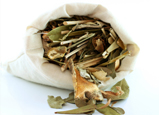
Devil's claw is the common name for Harpagophytum procumbens and Harpagophytum zeyheri, which belong to the sesame family. Originally from southern Africa and Madagascar, they are now found in the savannas and on the outskirts of the Kalahari Desert in South Africa and Namibia. Both plants are used to make the devil's claw root, or Harpagophytum radix. Medical researchers have found that devil's claw root can reduce inflammation and reduce pain. For thousands of years the Khoisan peoples of the Kalahari Desert have used devil's claw root, in remedies for treating pain and complications of pregnancy and in topical ointments for treating skin problems. Today, devil's claw is sold as a digestive aid and appetite stimulant. It also has mild pain-relieving action. Plant Description Devil's claw doesn't have an odor, but it contains substances that make it taste bitter. It is a leafy perennial with branching roots and shoots. It has secondary roots, or tubers, that grow out of the main and lateral roots. What's It Made Of? Devil's claw herbal preparations are made from sliced or pulverized dried tubers. You can make teas (infusions) from commercially available dried devil's claw root. The tubers contain active compounds called monoterpenes, of which harpagoside is the most important active compound. Available Forms Devil's claw is available as whole or ground root tubers. You can make teas (infusions) from dried devil's claw root. How to Take It Health care providers use devil's claw root to treat loss of appetite, rheumatism, arthritis, fever, myalgia, tendinitis, gastrointestinal problems, and liver and gallbladder problems. Devil's claw is also an effective therapy for degenerative musculoskeletal conditions (disorders of locomotive system). It is also used as a pain reliever (analgesic), sedative, and diuretic. Studies in animals have shown that devil's claw reduces the inflammation associated with arthritis. However, other studies have not demonstrated any anti-inflammatory properties. Devil's claw seems to work differently from most nonsteroidal anti-inflammatory drugs (NSAIDs). Its active compound, harpagoside (or a related compound called harpagide) is changed into another substance inside the body. The new substance, harpagogenin, may be the active ingredient that actually decreases the inflammation associated with arthritis. You can take devil's claw as a dried root, a liquid extract, or a tincture (solution made from herb and alcohol, or herb, alcohol, and water). If you are taking it for a serious medical condition such as rheumatism, always first consult with your health care provider. Recommended dosages for general use:
Precautions Devil's claw is nontoxic and safe, with virtually no side effects if taken in the recommended therapeutic doses. However, no one yet knows for sure whether devil's claw may be toxic if you take it long-term. And if you've been diagnosed with gastric ulcers, duodenal ulcers, or gallstones, you shouldn't take devil's claw unless your health care provider recommends it. Devil's claw is cardioactive, which means it can act on the heart. If you have a serious medical condition, you should not use this herb without the advice of a qualified health care provider. Some people think that devil's claw can cause miscarriage, but there is no scientific evidence that this is true. If you are pregnant, you should check with your health care provider before taking devil's claw or any other herbal supplement. Possible Interactions No harmful drug interactions have been reported. Supporting Research Baghdikian B, Lanhers M, Fleurentin J, et al. An analytical study, anti-inflammatory and analgesic effects of Harpagophytum procumbens and Harpagophytum zeyheri. Planta Med. 1997;63:171–176. Blumenthal M, ed. The Complete German Commission E Monographs: Therapeutic Guide to Herbal Medicines. Boston, Mass: Integrative Medicine Communications; 1998. Bradley P, ed. British Herbal Compendium. Dorset, England: British Herbal Medicine Association; 1992;1:96–98. British Herbal Pharmacopoeia 1996. 4th ed. Dorset, England: British Herbal Medicine Association; 1996. Costa de Pasquale R, Busa G, Circosta C, et al. A drug used in traditional medicine: Harpagophytum procumbens DC. III. Effects on hyperkinetic ventricular arrhythmias by reperfusion. J Ethnopharmacology. 1985;(13):193-9. Grahame R, Robinson B. Devil's claw (Harpagophytum procumbens): pharmacological and clinical studies. Ann Rheum Dis. 1981;40:632. Guyader M. 1984. Les plantes antirhumatismales. Etude historique et pharmacologique, et etude clinique du nebulisat d'Harpagophytum procumbens DC chez 50 patients arthrosiques sivis en service hospitalier. Paris: Universite Pierre et Marie Curie. Lanhers MC, Fleurentin J, Mortier F, Vinche A, Younos C. Anti-inflammatory and analgesic effects of an aqueous extract of Harpagophytum procumbens. Planta Med. 1992;58:117–123. Mabberley DJ. The Plant-Book: A Portable Dictionary of the Higher Plants. Cambridge, England: Cambridge University Press; 1987. McLeod D, et al. Investigations of Harpagophytum procumbens (Devil's Claw) in the treatment of experimental inflammation and arthritis in the rat. Br J Pharmacol. 1979;66:140P Moussard C, Alber D, Toubin M, Thevenon N, Henry JC. A drug used in traditional medicine, Harpagophytum procumbens: no evidence for NSAID-like effect on whole blood eicosanoid production in human. Prostaglandins Leukot Essent Fatty Acids. 1992;46:283–286. Newall C, Anderson L, Phillipson J. Herbal Medicines: A Guide for Health-care Professionals. London, England: Pharmaceutical Press; 1996. Occhiuto F, Circosta C, Ragusa S, Ficarra P, Costa De Pasquale R. A drug used in traditional medicine: Harpagophytum procumbens DC. IV. Effects on some isolated muscle preparations. J Ethnopharmacol. 1985;13:201–208. Schulz V, Hänsel R, Tyler VE. Rational Phytotherapy: A Physician's Guide to Herbal Medicine. 3rd ed. Berlin, Germany: Springer-Verlag; 1998. Soulimani R, Younos C, Mortier F, et al. The role of stomach digestion on the pharmacological activity of plant extracts, using as an example extracts of Harpagophytum procumbens.Can J Physiol Pharmacol. 1994;72(12):1532–1536. Tyler VE. The Honest Herbal: A Sensible Guide to the Use of Herbs and Related Remedies. 3rd ed. Binghampton, NY: Pharmaceutical Products Press; 1993. Whitehouse L, et al. Devil's Claw (Harpagophytum procumbens): no evidence for anti-inflammatory activity in the treatment of arthritic disease. Can Med Assoc J. 1983;129:249–251.
Copyright © 2000 Integrative Medicine Communications The publisher does not accept any responsibility for the accuracy of the information or the consequences arising from the application, use, or misuse of any of the information contained herein, including any injury and/or damage to any person or property as a matter of product liability, negligence, or otherwise. No warranty, expressed or implied, is made in regard to the contents of this material. No claims or endorsements are made for any drugs or compounds currently marketed or in investigative use. This material is not intended as a guide to self-medication. The reader is advised to discuss the information provided here with a doctor, pharmacist, nurse, or other authorized healthcare practitioner and to check product information (including package inserts) regarding dosage, precautions, warnings, interactions, and contraindications before administering any drug, herb, or supplement discussed herein. |