ALTERNATIVE DOCTOR, LLC



|
ALTERNATIVE DOCTOR, LLC
|
|
COMFREY
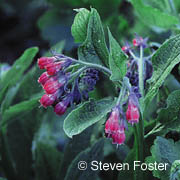
Comfrey is traditionally used for superficial wounds, and to reduce the inflammation of sprains and broken bones. Allantoin, which is good for healing wounds, is a key active ingredient in the roots and leaves of comfrey. Comfrey herb and leaf also contain rosmarinic acid, which helps decrease inflammation and helps heal blood-vessel injuries in the lungs. Plant Description Comfrey is a herbaceous perennial that originated in Europe and temperate parts of Asia. What's It Made Of? Comfrey products are made from the leaves or other parts of the plant grown above the ground. They can also be made from the roots, but root preparations are more likely to cause poisoning. Comfrey contains allantoin, rosmarinic acid, and pyrrolizidine-type alkaloids. Some think that comfrey is a beneficial herb, but scientific studies show that this herb can be very toxic. If you drink comfrey preparations or take it internally in other forms you run the risk of being poisoned. Some people have even died from eating or drinking comfrey remedies. Many comfrey plants contain poisonous compounds called pyrrolizidine alkaloids (PA), which are very toxic to the liver. Echimidine is the most poisonous pyrrolizidine alkaloid found in comfrey. Common comfrey (Symphytum officinale) doesn't usually contain dangerous pyrrolizidine alkaloids, but it sometimes does. Some comfrey products are made from other comfrey species that have dangerously high levels of echimidine, such as prickly comfrey (S. asperum) and Russian comfrey (S. uplandicum). The roots of all comfrey plants contain 10 times as much poisonous compound as the leaves. Do not use comfrey root unless you are being closely supervised by a qualified practitioner. Available Forms Comfrey ointments (containing 5 to 20 percent comfrey), creams, poultices, and liniments are made from the fresh or dried herb, fresh or dried leaf, or root of comfrey species. Use only products made from leaves of common comfrey (S. officinale). PA-free comfrey preparations are also available. Do not use products made from the root of the comfrey plant and those made from S. asperum and S. uplandicum. How to Take It Scientific studies in animals show that comfrey has healing and pain-relieving properties. You can apply comfrey herb and leaf preparations to your skin to relieve pain from fractures, sprains, minor wounds, bruises, pulled muscles and ligaments, sprains, blunt injuries, and broken bones. Recommended dosage: Stick to herb and leaf ointments, creams, and other topical preparations. Use only the amount recommended on the label and never more than this amount. You shouldn't use comfrey remedies for more than four to six weeks in any given year. Precautions Comfrey is basically safe if you follow the recommended dosages and use it only externally. Never use any comfrey preparation on broken skin. If you take comfrey internally as a beverage or in another form for a long period of time, you risk getting a liver disorder (hepatic veno-occlusive disease). There have also been cases of atropine poisoning from taking comfrey remedies by mouth. Plant collectors sometimes unknowingly mix together raw plant material from comfrey and belladonna, and the atropine poisoning is actually caused by elements in the belladonna plant. Always make sure you're using reputable commercial brands that have good quality manufacturing practices. And read the label carefully.
Possible Interactions No harmful drug interactions have been reported. Supporting Research Behninger C, et al. Studies on the effect of an alkaloid extract of Symphytum officinale on human lymphocyte cultures. Planta Med. 1989;55:518–522. Blumenthal M, ed. The Complete German Commission E Monograph; Therapeutic Guide to Herbal Medicines. Boston. Mass: Integrative Medicine Communications; 1998:115–116. Bradley P. ed. British Herbal Compendium. Vol. I. Dorset, England: British Herbal Medicine Association; 1992:66–68. Dorland's Illustrated Medical Dictionary. 25th ed. Philadelphia, Pa: WB Saunders; 1974 Furmanowa M, et al. Mutagenic effects of aqueous extracts of Symphytum officinale L. and of its alkaloidal fractions. J Appl Toxico. 1983;Jun;3(3):127-30. Goldman RS, et al. Wound healing and analgesic effect of crude extracts of Symphytum officinale.Fitoterapi. 1985;(6):323–329. Gruenwald J, Brendler T, Jaenicke C, eds. PDR for Herbal Medicines. Montvale, NJ: Medical Economics Co; 1998:1163–1166. Heinerman J. Heinerman's Encyclopedia of Fruits, Vegetables and Herbs. Englewood Cliffs, NJ: Prentice Hall; 1988:112–113. Miller LG. Herbal medicinals: selected clinical considerations focusing on known or potential drug-herb interactions. Arch Intern Med. 1998;158(20):2200–2211. Miskelly FG, Goodyer LI. Hepatic and pulmonary complications of herbal medicines. Postgrad Med J. 1992;68:935–936. Newall CA, Anderson LA, Phillipson JD. eds. Herbal Medicines: A Guide for Health-care Professionals. London: Pharmaceutical Press; 1996:87–89. Olinescu A, et al. Action of some proteic and carbohydrate components of Symphytum officinale upon normal and neoplastic cells. Roum Arch Microbiol Immunol. 1993;52:73–80. Ridker PM, et al. Hepatic venocclusive disease associated with the consumption of pyrrolizidine-containing dietary supplements. Gastroenterology. 1985;(88):1050–1054. Schulz V, Hänsel R, Tyler VE. Rational Phytotherapy: A Physician's Guide to Herbal Medicine. 3rd ed. Berlin: Springer; 1998:262. Shealy C. The Illustrated Encyclopedia of Healing Remedies. Dorset, UK: Element Books; 1998:132. Tyler VE. Herbs of Choice: The Therapeutic Use of Phytomedicinals. Binghamton, NY: Pharmaceutical Products Press; 1994:158–169. Tyler VE. The Honest Herbal: A Sensible Guide to the Use of Herbs and Related Remedies. 3rd Ed. Binghamton, NY: Pharmaceutical Products Press; 1993:97–100. Weston CFM, Cooper BT, Davies JD, et al. Veno-occlusive disease of the liver secondary to ingestion of comfrey. Br Med J. 1987;295:183.
Copyright © 2000 Integrative Medicine Communications The publisher does not accept any responsibility for the accuracy of the information or the consequences arising from the application, use, or misuse of any of the information contained herein, including any injury and/or damage to any person or property as a matter of product liability, negligence, or otherwise. No warranty, expressed or implied, is made in regard to the contents of this material. No claims or endorsements are made for any drugs or compounds currently marketed or in investigative use. This material is not intended as a guide to self-medication. The reader is advised to discuss the information provided here with a doctor, pharmacist, nurse, or other authorized healthcare practitioner and to check product information (including package inserts) regarding dosage, precautions, warnings, interactions, and contraindications before administering any drug, herb, or supplement discussed herein |