ALTERNATIVE DOCTOR, LLC



|
ALTERNATIVE DOCTOR, LLC
|
|
Chronic Obstructive Pulmonary Disease Chronic obstructive pulmonary disease (COPD) causes severe shortness of breath, which can result from chronic bronchitis, emphysema, or both. Chronic bronchitis is defined as a constant cough and excessive mucus production that lasts for at least three months for more than two consecutive years. Emphysema is characterized by damage to the lungs, which causes them to lose their elasticity. COPD is the fifth leading cause of death in the United States. Signs and Symptoms
What Causes It? Smoking is the number one cause of COPD. It can also be caused be exposure to pollutants. One rare form is inherited. What to Expect at Your Provider's Office Your health care provider will listen to your chest for wheezes, crackles, and decreased breath sounds. If your symptoms are severe, your provider will order a chest X-ray and lung-function tests. He or she will measure levels of blood gases in your arteries to determine if your condition might be hereditary. He or she will urge you to quit smoking immediately. Treatment Options Treatment Plan Not smoking is the key to preventing COPD or to stop it from getting worse. Drug treatment varies depending on the severity of the disease. Your health care provider may talk with you about lifestyle changes you can make to help relieve the symptoms of COPD. These include exercising and eating a healthy diet. Support groups or therapy can help make it easier to live with the condition. Drug Therapies Prescription
Over the Counter N/A Complementary and Alternative Therapies Complementary and alternative therapies can help decrease your symptoms and prevent infections. Some also can help you quit smoking. Nutrition
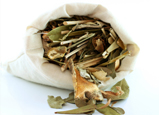
Herbs Herbs may be used as dried extracts (capsules, powders, teas), glycerites (glycerine extracts), or tinctures (alcohol extracts). Unless otherwise indicated, teas should be made with 1 tsp. herb per cup of hot water. Steep covered 5 to 10 minutes for leaf or flowers, and 10 to 20 minutes for roots. Drink 2 to 4 cups per day.
Mix equal parts of herb, or tincture of four to six of the above herbs. Dose is 1 cup tea three times per day, or 30 to 60 drops tincture three times per day.
Homeopathy Homeopathy may be useful as a supportive therapy. Physical Medicine
Acupuncture Has been shown to have great benefit in smoking cessation. Following Up Your health care provider will want you to come back once or twice a year to monitor your lung function; however, if your symptoms become more severe, you should see your provider immediately so that life-threatening respiratory failure does not occur. Special Considerations If you have COPD, you are prone to respiratory infections. Your health care provider will most likely tell you to get a flu shot every year. Supporting Research Blumenthal M, ed. The Complete German Commission E Monographs. Boston, Mass: Integrative Medicine Communications; 1998:423, 468. Bordow RA, Moser KM. Manual of Clinical Problems in Pulmonary Medicine. 4th ed. Boston, Mass:Little, Brown; 1996:212–215. Celli BR. Pulmonary rehabilitation in patients with COPD. Am J Respir Crit Care Med. 1995;152:861–864. Duke JA. The Green Pharmacy. Emmaus, Pa: Rodale Press; 1997:93–95, 179–183. Fauci AS, Braunwald E, Isselbacher KJ et al, eds. Harrison's Principles of Internal Medicine. 14th ed. New York, NY: McGraw-Hill; 1998:1451–1457. Ferguson GT, Cherniack RM. Management of chronic obstructive pulmonary disease. N Engl J Med. 1993;328:1017–1022. Snider GL. Standards for the Diagnosis and Care of Patients with Chronic Obstructive Pulmonary Disease. Washington Crossing, Pa: Scientific Frontiers; l996:1–12. Woodley M, Whelan A. Manual of Medical Therapeutics. 27th ed. Boston, Mass: Little, Brown; 1992:200–202.
Copyright © 2000 Integrative Medicine Communications The publisher does not accept any responsibility for the accuracy of the information or the consequences arising from the application, use, or misuse of any of the information contained herein, including any injury and/or damage to any person or property as a matter of product liability, negligence, or otherwise. No warranty, expressed or implied, is made in regard to the contents of this material. No claims or endorsements are made for any drugs or compounds currently marketed or in investigative use. This material is not intended as a guide to self-medication. The reader is advised to discuss the information provided here with a doctor, pharmacist, nurse, or other authorized healthcare practitioner and to check product information (including package inserts) regarding dosage, precautions, warnings, interactions, and contraindications before administering any drug, herb, or supplement discussed herein. |



















