ALTERNATIVE DOCTOR, LLC



|
ALTERNATIVE DOCTOR, LLC
|
|
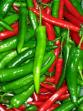
CAYENNE Cayenne, also known as red pepper, was first introduced to the world outside
the Americas by the Caribbean Indians, who gave it to Columbus. Since then its
popularity has spread, and it has become an important spice, particularly in
Cajun and Creole cooking, and in the cuisines of southeast Asia, China, southern
Italy, and Mexico. Capsaicin is the ingredient in cayenne that makes it hot.
Even though cayenne tastes hot, capsaicin actually helps lower body temperature,
which is one of the reasons that people in hot climates like to eat so much of
it. Capsaicin also contributes to many of cayenne's other medicinal properties
to stimulate the cardiovascular system, relieve pain on the surface of the skin
or in joints, improve digestion, act as an expectorant, and fight bacteria. Cayenne lowers levels of cholesterol in the blood, which helps lower blood
pressure. It also prevents blood in your arteries from clotting. These
properties help prevent heart disease, such as atherosclerosis (hardening of the
arteries). Even though cayenne can sting your tongue, it is actually a powerful pain
reliever. It initially stimulates, but then decreases the intensity of pain
signals in the body. This makes it particularly effective for people with
chronic pain, since it takes several days to see significant results. Those who
suffer from shingles, pain from diabetes, postmastectomy pain, and other
postsurgical pain, may especially benefit from several different cayenne or
capsaicin creams that are available. The capsaicin in cayenne not only relieves
the pain of osteoarthritis and rheumatoid arthritis, but it also helps reduce
the swelling from these conditions when used as a rub. Cayenne improves digestion by stimulating production of digestive juices in
the stomach and by fighting bacteria that could cause infection. Its
antibacterial power also fights diarrhea caused by infection. As an expectorant,
it thins mucus and helps move it out of the lungs. Because it also strengthens
lung tissue, it is helpful for those with emphysema. Plant Description Cayenne is a shrub that grows in subtropical and tropical climates. Its fruit
grows into long pods that turn red, orange, or yellow when they are ripe. The
fruit is eaten raw or cooked, or is dried and powdered into the spice that has
been used for centuries in food and medicines. What's It Made Of? Studies have shown that capsaicin, the most active ingredient in cayenne,
lowers blood cholesterol levels and decreases the intensity of pain signals in
the body. It is also an antioxidant (which helps protect your cells from damage)
and an antibacterial. Available Forms Cayenne may be taken by eating raw or cooked red pepper. Dried red pepper is
available powdered, which may be added to food, stirred into juice, tea, or
milk, or taken in capsule form. It also comes in creams for external use (should
contain at least 0.025 percent capsaicin). How to Take It Because cayenne is so good for your heart, adding it regularly to food or
taking it in capsule form can help prevent heart disease. Although it is spicy,
it actually aids digestion and is not irritating to most ulcers. It is powerful
even in small doses, so it is best not to take more than you would eat with
food. As a pain reliever, cayenne powder or cream can help relieve toothache,
shingles, arthritis, psoriasis, and other kinds of chronic pain. Although it may
cause some initial burning or itching, this should go away quickly. Because
cayenne works by first stimulating and then decreasing the intensity of pain
signals in the body, the pain may increase slightly but then should diminish
greatly over the first few days. As an external pain reliever (that is, when applied to the skin), capsaicin
cream (0.025 to 0.075 percent capsaicin) may be applied directly to the affected
area up to four times a day (brand names include Zostrix, Axsain, Capzasin-P).
For improved digestion and prevention of heart disease, capsaicin may be
taken in capsules (30 to 120 mg, three times daily). You can make an infusion by
adding 1/4 to 1/2 tsp. of powder to a cup of boiling water and drinking it. Precautions Keep cayenne away from your eyes, and wash your hands thoroughly after use.
Because cayenne does not dissolve easily in water, use vinegar to remove it.
Capsaicin cream may cause skin irritation in some people. Test it on a small
area of your skin before extended use. If it causes irritation, discontinue use.
It may cause stomach irritation, but does not worsen duodenal ulcers. Do not use
it for children under age 2. It is safe for use during pregnancy. It is not
known if the spicy compounds are transferred through breast-feeding. Possible Interactions Using capsaicin cream on the skin may increase the risk of cough associated
with angiotensin-converting enzyme (ACE) inhibitors, medications used to
regulate blood pressure. If you use capsaicin cream while on these medications
and you develop a cough, discontinue use of the capsaicin cream. Supporting Research Boone CW, Kelloff GJ, Malone WE. Identification of candidate cancer
chemopreventive agents and their evaluation in animal models and human clinical
trials: a review. Cancer Res. 1990;50:2–9. Bouraoui A, Toumi A, Mustapha HB, et al. Effects of capsicum fruit on
theophylline absorption and bioavailability in rabbits. Drug-Nutrient
Interact. 1988;5:345–350. Chevallier A. The Encyclopedia of Medicinal Plants. London, England:
DK Publishing Inc; 1996. Cliff MA, Green B. Sensitization and desensitization to capsaicin and menthol
in the oral cavity: interactions and individual differences. Physiol Behav.
1996;59(3):487–494. Duke J. The Green Pharmacy. Emmaus, Pa: Rodale Press; 1997. Haka JF Jr. Topical capsaicin induces cough in patient receiving ACE
inhibitor. Ann Allergy. 1990;65:322. Hot peppers and substance P. Lancet. 1983;I:1198. Editorial. Gruenwald J, Brendler T, Jaenicke C et al, eds. PDR for Herbal Medicines.
Montvale, NJ: Medical Economics Company; 1998. Heinerman J. Heinerman's Encyclopedia of Fruits, Vegetables and Herbs.
Englewood Cliffs, NJ: Prentice Hall; 1988. Kong YO, Kin CS, Kim ND, et al. Effect of capsicum components on liver
microsomal cytochrome P-450 in rat [in Chinese]. Saeng Hakhoe Chi.
1979;10(1):17–22. Kowalchik C, Hylton W, eds. Rodale's Illustrated Encyclopedia of Herbs.
Emmaus, Pa: Rodale Press; 1987. Locock RA. Capsicum. Can Pharm J. 1985;517–519. Munn, S.E., et al. The effect of topical capsaicin on substance P
immunoreactivity: A clinical trial and immuno-hisochemical analysis [letter].
Acta Derm Venereol (Stockh). 1997;77:158–159. Murray M. The Healing Power of Herbs. Rocklin, Calif: Prima
Publishing; 1995. Newall C, et al. Herbal Medicines. London, England: Pharmaceutical
Press; 1996. Tandan R, et al. Topical capsaicin in painful diabetic neuropathy. Controlled
study with long-term follow-up. Diabetes Care. 1992;15:8–14. Tyler V. The Honest Herbal. New York, NY: Pharmaceutical Products
Press; 1993. Visudhiphan S, et al. The relationship between high fibrinolytic activity and
daily capsicum ingestion in Thais. Am J Clin Nutr. 1982;35:1452–1458. Vogl T. Treatment of hunan hand. N Engl J Med. 1982;306:178. Yeoh KG, et al. Chili protects against aspirin-induced gastroduodenal mucosal
injury in humans. Dig Dis Sci. 1995;40:580–583. Copyright © 2000 Integrative Medicine Communications The publisher does not accept any responsibility for the
accuracy of the information or the consequences arising from the application,
use, or misuse of any of the information contained herein, including any injury
and/or damage to any person or property as a matter of product liability,
negligence, or otherwise. No warranty, expressed or implied, is made in regard
to the contents of this material. No claims or endorsements are made for any
drugs or compounds currently marketed or in investigative use. This material is
not intended as a guide to self-medication. The reader is advised to discuss the
information provided here with a doctor, pharmacist, nurse, or other authorized
healthcare practitioner and to check product information (including package
inserts) regarding dosage, precautions, warnings, interactions, and
contraindications before administering any drug, herb, or supplement discussed
herein. |