ALTERNATIVE DOCTOR, LLC



|
ALTERNATIVE DOCTOR, LLC
|
|
Anxiety Anxiety is a general feeling of being worried. Everyone experiences anxiety from time to time as a result of life experiences, but those with generalized anxiety disorder feel anxious frequently or excessively, not necessarily as a result of a particular situation. Signs and Symptoms
What Causes It? Anxiety can result from many specific causes, such as an underlying medical condition or drugs you are taking. However, there may be no specific cause. Factors such as genetics and early life experiences may play a role. What to Expect at Your Provider's Office Your health care provider will talk to you about when you feel anxious, what it feels like, and your medical history. He or she will give you a physical examination and may take blood or urine samples for laboratory tests. In some cases, you will have an electrocardiogram (EKG) to rule out heart problems. Treatment Options Treatment Plan Sometimes anxiety has a specific physical cause. A treatment plan can be made once the cause is identified. There are a variety of ways to treat anxiety that has no physical cause. Short-term counseling can help you learn coping strategies, problem solving, and increase self-esteem. There are also many self-regulation procedures that you can learn. These include relaxation and deep breathing techniques. Sometimes your health care provider will prescribe drugs to help you until you have mastered these techniques. Drug Therapies Prescription
Over the Counter N/A Complementary and Alternative Therapies Mind-body techniques, nutrition, and herbs may be an effective way to treat anxiety. Progressive muscle relaxation, diaphragmatic breathing, biofeedback, meditation, and self-hypnosis can help you relax and reduce your anxiety. Talk with your health care provider about these techniques. Nutrition
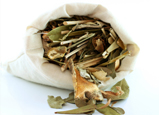
Herbs Herbs are generally a safe way to strengthen and tone the body's systems. As with any therapy, it is important to work with your provider on getting your problem diagnosed before you start any treatment. Herbs may be used as dried extracts (capsules, powders, teas), glycerites (glycerine extracts), or tinctures (alcohol extracts). Unless otherwise indicated, teas should be made with 1 tsp. herb per cup of hot water. Steep covered 5 to 10 minutes for leaf or flowers, and 10 to 20 minutes for roots. Drink 2 to 4 cups per day. Tinctures may be used singly or in combination as noted. A tea (3 to 4 cups per day) or tincture (10 to 20 drops four to six times per day) from the following herbs will help to reduce anxiety and strengthen the nervous system.
Kava kava (100 to 200 mg two to four times a day) and St. John's wort (300 mg two to three times per day) may be taken as dried extracts to maximize effectiveness in moderate anxiety. Essential oils of lemon balm, bergamot, and jasmine are calming and may be used as aromatherapy. Place several drops in a warm bath or atomizer, or on a cotton ball. Homeopathy Some of the most common remedies used for anxiety are listed below. Usually, the dose is 12X to 30C every one to four hours until your symptoms get better.
Massage Therapeutic massage can be helpful in reducing anxiety and alleviating stress. Following Up Follow your health care provider's instructions, and practice relaxation techniques as needed. Special Considerations Be sure to tell your health care provider if you are pregnant. Call your provider if you experience any significant side effects from prescribed medications. While the herbal tea suggested above is safe during pregnancy, you avoid the dried extracts of kava kava and St. John's wort if you are pregnant. Supporting Research American Council on Collaborative Medicine. Dr. Victor Bagnall's Nutritional Therapy. Accessed at: http://www.nutrimed.com/anxiety.htm on December 2, 1998. American Psychiatric Association. Diagnostic and Statistical Manual of Mental Disorders. 4th ed. Washington, DC: American Psychiatric Association; 1994. Andreoli TE, Bennett JC, Carpenter CCJ. Cecil Essentials of Medicine. 3rd ed. Philadelphia, Pa: WB Saunders; 1993. Barker LR, Burton JR, Zieve PD, eds. Principles of Ambulatory Medicine. 4th ed. Baltimore, Md: Williams & Wilkins; 1995:139–154. Blumenthal M, ed. The Complete German Commission E Monographs. Boston, Mass: Integrative Medicine Communications; 1998:422, 463–464. Dr. Bower's Complementary and Alternative Medicine Home Page. Available at: http://avery.med.virginia.edu/~pjb3s. Goldberg RJ. Anxiety reduction by self-regulation: theory, practice, and evaluation. Ann Intern Med. 1982;96:483. Health and Healing News. Accessed at: http://hhnews.com/kava_update.htm on December 2, 1998. Herbal Alternatives. Accessed at: http://herbalalternatives.com/kava.htm on December 2, 1998. Jussofie A, Schmiz A, Hiernke C. Kavapyrone enriched extract from Piper methysticum as modulator of the GABA binding site in different regions of the rat brain. Psychopharmacology. 1994;116:469–474. Kinzler E, Kromer J, Lehmann E. Effect of a special kava extract in patients with anxiety-, tension-, and excitation states of non-psychotic genesis. Double blind study with placebos over four weeks [in German]. Arzneimforsch. 1991;41:584–588. Lehmann E, et al. Efficacy of special kava extract (Piper methysticum) in patients with states of anxiety, tension and excitedness of non-mental origin-A double blind placebo controlled study of four weeks treatment. Phytomedicine. 1996;3:113–119. Lindenberg Von D, Pitule-Schodel H. D, L-Kavain in comparison with oxazepam in anxiety states. Double-blind clinical trial. Forschr Med. 1990;108:50–54. Morrison R. Desktop Guide to Keynotes and Confirmatory Symptoms. Albany, Calif: Hahnemann Clinic Publishing; 1993:4, 40, 293. Stein JH, ed. Internal Medicine. 4th ed. St. Louis, Mo: Mosby-Year Book; 1994. Volz HP, Kieser M. Kava kava extract WS 1490 versus placebo in anxiety disorders-a randomized placebo controlled 25 week outpatient trial. Pharmacopsychiatry. 1997;30:1–5.
Copyright © 2000 Integrative Medicine Communications The publisher does not accept any responsibility for the accuracy of the information or the consequences arising from the application, use, or misuse of any of the information contained herein, including any injury and/or damage to any person or property as a matter of product liability, negligence, or otherwise. No warranty, expressed or implied, is made in regard to the contents of this material. No claims or endorsements are made for any drugs or compounds currently marketed or in investigative use. This material is not intended as a guide to self-medication. The reader is advised to discuss the information provided here with a doctor, pharmacist, nurse, or other authorized healthcare practitioner and to check product information (including package inserts) regarding dosage, precautions, warnings, interactions, and contraindications before administering any drug, herb, or supplement discussed herein |



















